
High-quality sanding technology
Bore honing is the finishing process that improves surface quality and the precision of the manufactured component, performed with horizontal or vertical axis honing machines.
The machining process involves the use of honing tools that, through the rotation of the spindle and the reciprocating movement of the workpiece carriage, by expanding the abrasive parts according to set parameters, remove the required stock, ensuring highly accurate finishes and high precision.
MOMA develops a honing technology high-end for small, medium, and large bore diameters. Robustness, reliability e precision are the foundation of the work established and developed by MOMA.
Our projects start from a deep knowledge of finishing applications, from development carried out with 3D CAD systems and cutting-edge machine tools, which allow us to guarantee realistic delivery times, even for special applications, achieving tolerances on geometries and surfaces typical of the hydraulics world.
Features and application fields
Our tooling range includes standard and special solutions for complex honing applications for almost all bore diameters.
Main highlights:
Ideal in the diameter range from 4mm to 40mm (Standard) up to very large dimensions
Two-piece design for easy replacement, cleaning, and maintenance of parts\r\nShort delivery times
Front indicator light highlighting the stone wear limit, allowing even less experienced operators to manage the production cycle
Absence of contact parts between the spindle body and the workpiece, thus ensuring constant roughness values and a very long life for our tools
Possibility of using both conventional abrasives and super-abrasives
Executions specifically designed and manufactured for machining blind holes, tandem holes, interrupted holes, etc.

Abrasive stones
The development and design of honing stones is carried out thanks to an analysis conducted at the customer’s site and the experience of many successfully implemented honing processes.
The MOMA product range includes:
Resin-bonded, ceramic, metal-bonded, and electroplated honing stones and honers, available in both single-use and reconditionable versions
Conventional abrasives and superabrasives
Reduced machining times
Production process efficient in terms of repeatability
Process development and honing
Typical applications include: engine injectors, turbochargers, hydraulic components, ceramic parts, engine blocks, connecting rods, pistons, lubrication systems, hydraulic distributors, valves, medical and glass applications, as well as military and aerospace industry components.
Complex application fields, functional components for new and efficient generations of vehicles, drive MOMA to work closely with its customers. High level of expertise drives us toward ever-new challenges and research. We therefore consider ourselves extremely flexible and available for collaboration to solve and develop cutting-edge solutions.
MOMA offers:
Process development and consulting
Prototype honing tools
Honing
Trial samples of available material
Small demonstration batches
Repair of honing stone holders
Replacement of expansion rods
Restoration of damaged parts
Honing oils, both mineral and synthetic-based, with excellent cleaning, lubricating, and cooling properties, essential in superfinishing processes

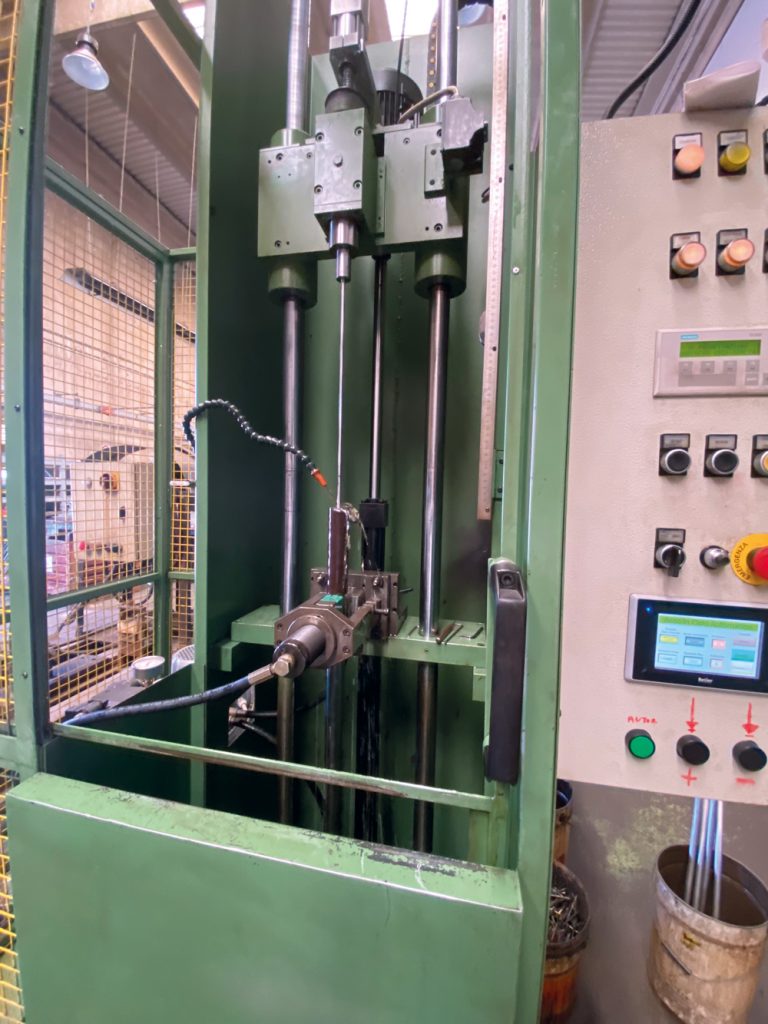


Process development and honing
This honing technology is indispensable wherever it is necessary to improve the functional sliding properties, guidance or sealing properties between contacting surfaces in bores.
Typical applications include: injection systems, vehicle transmissions, turbochargers, hydraulic components, ceramic parts, small engine blocks, connecting rods, pistons, lubrication systems, medical and glass applications, and finally military and aerospace industry components.
Honing technology – Your advantages
Accurate control of the machined diameter
High-precision hole roundness
Nominal diameters starting from 4mm
Extreme surface roughness
Strict control over hole cylindricity
Low processing times
Efficient production process in terms of repeatability and low costs